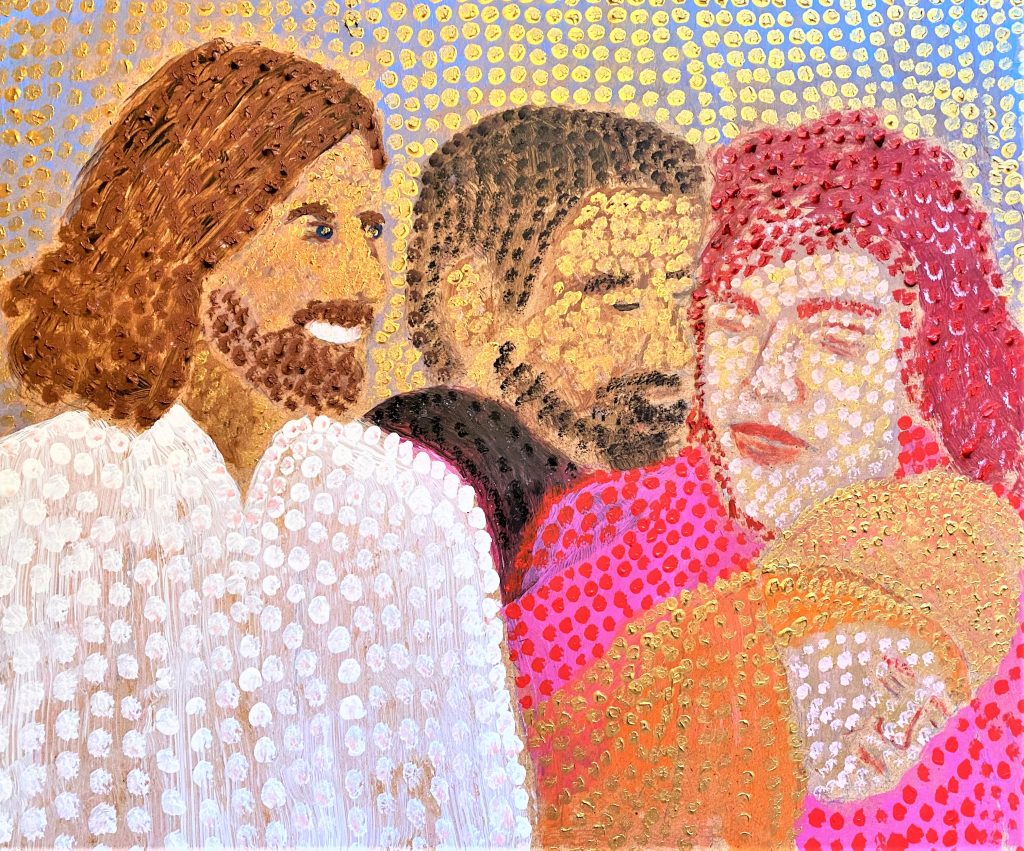
Knowing that we are all children of God gives us a vision of the worth of others and the ability to rise above prejudice.
The Lord’s teachings are for eternity and for all of God’s children.
In this message I will give some examples from the United States, but the principles I teach are applicable everywhere.
We live in a time of anger and hatred in political relationships and policies.
We felt it this summer when some went beyond peaceful protests and engaged in destructive behavior.
We feel it in some current campaigns for public offices.
Unfortunately, some of this has even spilled over into political statements and unkind references in our Church meetings.
In a democratic government we will always have differences over proposed candidates and policies.
However, as followers of Christ we must forgo the anger and hatred with which political choices are debated or denounced in many settings.
Here is one of our Savior’s teachings, probably well known but rarely practiced:
“Ye have heard that it hath been said, Thou shalt love thy neighbour, and hate thine enemy.
“But I say unto you, Love your enemies, bless them that curse you, do good to them that hate you, and pray for them which despitefully use you, and persecute you” (Matthew 5:43–44).1
For generations, Jews had been taught to hate their enemies, and they were then suffering under the domination and cruelties of Roman occupation.
Yet Jesus taught them, “Love your enemies” and “do good to them that … despitefully use you.”
What revolutionary teachings for personal and political relationships!
But that is still what our Savior commands.
In the Book of Mormon we read,
“For verily, verily I say unto you, he that hath the spirit of contention is not of me, but is of the devil, who is the father of contention, and he stirreth up the hearts of men to contend with anger, one with another” (3 Nephi 11:29).
Loving our enemies and our adversaries is not easy.
“Most of us have not reached that stage of … love and forgiveness,”
President Gordon B. Hinckley observed, adding, “It requires a self-discipline almost greater than we are capable of.”2
But it must be essential, for it is part of the Savior’s two great commandments to “love the Lord thy God” and to “love thy neighbour as thyself” (Matthew 22:37, 39).
And it must be possible, for He also taught, “Ask, and it shall be given you; seek, and ye shall find” (Matthew 7:7).3
How do we keep these divine commandments in a world where we are also subject to the laws of man?
Fortunately, we have the Savior’s own example of how to balance His eternal laws with the practicalities of man-made laws.
When adversaries sought to trap Him with a question about whether Jews should pay taxes to Rome, He pointed to the image of Caesar on their coins and declared, “Render therefore unto Caesar the things which be Caesar’s, and unto God the things which be God’s” (Luke 20:25).4
So, we are to follow the laws of men (render unto Caesar) to live peacefully under civil authority, and we follow the laws of God toward our eternal destination.
But how do we do this—especially how do we learn to love our adversaries and our enemies?
The Savior’s teaching not to “contend with anger” is a good first step.
The devil is the father of contention, and it is he who tempts men to contend with anger.
He promotes enmity and hateful relationships among individuals and within groups.
President Thomas S. Monson taught that anger is “Satan’s tool,” for “to be angry is to yield to the influence of Satan.
We move toward loving our adversaries when we avoid anger and hostility toward those with whom we disagree.
It also helps if we are even willing to learn from them.
Among other ways to develop the power to love others is the simple method described in a long-ago musical.
When we are trying to understand and relate to people of a different culture, we should try getting to know them.
In countless circumstances, strangers’ suspicion or even hostility give way to friendship or even love when personal contacts produce understanding and mutual respect.6
An even greater help in learning to love our adversaries and our enemies is to seek to understand the power of love.
Here are three of many prophetic teachings about this.
The Prophet Joseph Smith taught that “it is a time-honored adage that love begets love. Let us pour forth love—show forth our kindness unto all mankind.”7
President Howard W. Hunter taught: “The world in which we live would benefit greatly if men and women everywhere would exercise the pure love of Christ, which is kind, meek, and lowly.
It is without envy or pride. … It seeks nothing in return. … It has no place for bigotry, hatred, or violence. … It encourages diverse people to live together in Christian love regardless of religious belief, race, nationality, financial standing, education, or culture.”8
And President Russell M. Nelson has urged us to “expand our circle of love to embrace the whole human family.”9
An essential part of loving our enemies is to render unto Caesar by keeping the laws of our various countries.
Though Jesus’s teachings were revolutionary, He did not teach revolution or lawbreaking. He taught a better way.
Modern revelation teaches the same:
“Let no man break the laws of the land, for he that keepeth the laws of God hath no need to break the laws of the land.
And our article of faith, written by the Prophet Joseph Smith after the early Saints had suffered severe persecution from Missouri officials, declares, “We believe in being subject to kings, presidents, rulers, and magistrates, in obeying, honoring, and sustaining the law” (Articles of Faith 1:12).
This does not mean that we agree with all that is done with the force of law.
It means that we obey the current law and use peaceful means to change it.
It also means that we peacefully accept the results of elections.
We will not participate in the violence threatened by those disappointed with the outcome.10
In a democratic society we always have the opportunity and the duty to persist peacefully until the next election.
The Savior’s teaching to love our enemies is based on the reality that all mortals are beloved children of God.
That eternal principle and some basic principles of law were tested in the recent protests in many American cities.
At one extreme, some seem to have forgotten that the First Amendment to the United States Constitution guarantees the “right of the people peaceably to assemble, and to petition the Government for a redress of grievances.”
That is the authorized way to raise public awareness and to focus on injustices in the content or administration of the laws.
And there have been injustices.
In public actions and in our personal attitudes, we have had racism and related grievances.
In a persuasive personal essay, the Reverend Theresa A. Dear of the National Association for the Advancement of Colored People (NAACP) has reminded us that “racism thrives on hatred, oppression, collusion, passivity, indifference and silence.”11
As citizens and as members of The Church of Jesus Christ of Latter-day Saints, we must do better to help root out racism.
At the other extreme, a minority of participants and supporters of these protests and the illegal acts that followed them seem to have forgotten that the protests protected by the Constitution are peaceful protests.
Protesters have no right to destroy, deface, or steal property or to undermine the government’s legitimate police powers.
The Constitution and laws contain no invitation to revolution or anarchy.
All of us—police, protesters, supporters, and spectators—should understand the limits of our rights and the importance of our duties to stay within the boundaries of existing law.
Abraham Lincoln was right when he said, “There is no grievance that is a fit object of redress by mob law.”12
Redress of grievances by mobs is redress by illegal means.
That is anarchy, a condition that has no effective governance and no formal police, which undermines rather than protects individual rights.
One reason the recent protests in the United States were shocking to so many was that the hostilities and illegalities felt among different ethnicities in other nations should not be felt in the United States.
This country should be better in eliminating racism not only against Black Americans, who were most visible in the recent protests, but also against Latinos, Asians, and other groups. This nation’s history of racism is not a happy one, and we must do better.
The United States was founded by immigrants of different nationalities and different ethnicities.
Its unifying purpose was not to establish a particular religion or to perpetuate any of the diverse cultures or tribal loyalties of the old countries.
Our founding generation sought to be unified by a new constitution and laws.
That is not to say that our unifying documents or the then-current understanding of their meanings were perfect.
The history of the first two centuries of the United States showed the need for many refinements, such as voting rights for women and, particularly, the abolition of slavery, including laws to ensure that those who had been enslaved would have all the conditions of freedom.
Two Yale University scholars recently reminded us:
“For all its flaws, the United States is uniquely equipped to unite a diverse and divided society. …
“… Its citizens don’t have to choose between a national identity and multiculturalism.
Americans can have both.
But the key is constitutional patriotism.
We have to remain united by and through the Constitution, regardless of our ideological disagreements.”13
Many years ago, a British foreign secretary gave this great counsel in a debate in the House of Commons: “We have no eternal allies and we have no perpetual enemies.
Our interests are eternal and perpetual, and these interests it is our duty to follow.”14
That is a good secular reason for following “eternal and perpetual” interests in political matters.
In addition, the doctrine of the Lord’s Church teaches us another eternal interest to guide us: the teachings of our Savior, who inspired the Constitution of the United States and the basic laws of many of our countries.
Loyalty to established law instead of temporary “allies” is the best way to love our adversaries and our enemies as we seek unity in diversity.
Knowing that we are all children of God gives us a divine vision of the worth of all others and the will and ability to rise above prejudice and racism.
As I have lived for many years in different places in this nation, the Lord has taught me that it is possible to obey and seek to improve our nation’s laws and also to love our adversaries and our enemies.
While not easy, it is possible with the help of our Lord, Jesus Christ.
He gave this command to love, and He promises His help as we seek to obey it. I testify that we are loved and will be helped by our Heavenly Father and His Son, Jesus Christ.
In the name of Jesus Christ, amen.
Richard W. Linford, editor, member of The Church of Jesus Christ of Latter-day Saints.
Not even the vast sacrifices Micah knew were impossible can redeem the smallest sin.
Left to our own devices, the prospect of returning to live in God’s presence is hopeless.6
Without the blessings that come from Heavenly Father and Jesus Christ, we can never do enough or be enough by ourselves.
The good news, though, is that because of and through Jesus Christ we can become enough.7
All people will be saved from physical death by the grace of God, through the death and Resurrection of Jesus Christ.8
And if we turn our hearts to God, salvation from spiritual death is available to all “through the Atonement of [Jesus] Christ … by obedience to the laws and ordinances of the Gospel.”9
We can be redeemed from sin to stand clean and pure before God.
As Micah explained, “[God] hath shewed thee, O man, what is good; and what doth the Lord require of thee, but to do justly, and to love mercy, and to walk humbly with thy God?”10
Micah’s direction on turning our hearts to God and qualifying for salvation contains three interconnected elements.
To do justly means acting honorably with God and with other people.
We act honorably with God by walking humbly with Him.
We act honorably with others by loving mercy.
To do justly is therefore a practical application of the first and second great commandments, to “love the Lord thy God with all thy heart, and with all thy soul, and with all thy mind … [and to] love thy neighbour as thyself.”11
To do justly and walk humbly with God is to intentionally withdraw our hand from iniquity, walk in His statutes, and remain authentically faithful.12
A just person turns away from sin and toward God, makes covenants with Him, and keeps those covenants.
A just person chooses to obey the commandments of God, repents when falling short, and keeps on trying.
When the resurrected Christ visited the Nephites, He explained that the law of Moses had been replaced by a higher law.
He instructed them not to “offer up … sacrifices and … burnt offerings” any longer but to offer “a broken heart and a contrite spirit.”
He also promised, “And whoso cometh unto me with a broken heart and a contrite spirit, him will I baptize with fire and with the Holy Ghost.”13
When we receive and use the gift of the Holy Ghost after baptism, we can enjoy the constant companionship of the Holy Ghost
Jesus Christ’s sacrifice for sin and salvation from spiritual death are available to all who have such a broken heart and contrite spirit.15
A broken heart and contrite spirit prompt us to joyfully repent and try to become more like our Heavenly Father and Jesus Christ.
As we do so, we receive the Savior’s cleansing, healing, and strengthening power.
We not only do justly and walk humbly with God;
we also learn to love mercy the way that Heavenly Father and Jesus Christ do.
God delights in mercy and does not begrudge its use.
In Micah’s words to Jehovah, “Who is a God like unto thee, that pardoneth iniquity, … will have compassion upon us,” and will “cast all … sins into the depths of the sea.”16
To love mercy as God does is inseparably connected to dealing justly with others and not mistreating them.
The importance of not mistreating others is highlighted in an anecdote about Hillel the Elder, a Jewish scholar who lived in the first century before Christ.
One of Hillel’s students was exasperated by the complexity of the Torah—the five books of Moses with their 613 commandments and associated rabbinic writings.
The student challenged Hillel to explain the Torah using only the time that Hillel could stand on one foot.
Hillel may not have had great balance but accepted the challenge.
Always dealing honorably with others is part of loving mercy.
Consider a conversation I overheard decades ago in the emergency department of Johns Hopkins Hospital in Baltimore, Maryland, in the United States.
A patient, Mr. Jackson, was a courteous, pleasant man who was well known to the hospital staff.
He had previously been hospitalized multiple times for the treatment of alcohol-related diseases.
On this occasion, Mr. Jackson returned to the hospital for symptoms that would be diagnosed as inflammation of the pancreas caused by alcohol consumption.
Toward the end of his shift, Dr. Cohen, a hardworking and admired physician, evaluated Mr. Jackson and determined that hospitalization was warranted.
Dr. Cohen assigned Dr. Jones, the physician next up in rotation, to admit Mr. Jackson and oversee his treatment.
Dr. Jones had attended a prestigious medical school and was just beginning her postgraduate studies.
This grueling training was often associated with sleep deprivation, which likely contributed to Dr. Jones’s negative response.
Confronted with her fifth admission of the night, she complained loudly to Dr. Cohen.
She felt it was unfair that she would have to spend many hours caring for Mr. Jackson, because his predicament was, after all, self-inflicted.
Dr. Cohen’s emphatic response was spoken in almost a whisper.
He said, “Dr. Jones, you became a physician to care for people and work to heal them.
You didn’t become a physician to judge them.
If you don’t understand the difference, you have no right to train at this institution.”
Following this correction, Dr. Jones diligently cared for Mr. Jackson during the hospitalization.
Mr. Jackson has since died.
Both Dr. Jones and Dr. Cohen have had stellar careers.
But at a critical moment in her training, Dr. Jones needed to be reminded to do justly, to love mercy, and to care for Mr. Jackson without being judgmental.19
Over the years, I have benefited from that reminder.
Loving mercy means that we do not just love the mercy God extends to us; we delight that God extends the same mercy to others.
And we follow His example. “All are alike unto God,”20 and we all need spiritual treatment to be helped and healed.
The Lord has said, “Ye shall not esteem one flesh above another,
or one man shall not think himself above another.”21
Jesus Christ exemplified what it means to do justly and to love mercy.
He freely associated with sinners,
treating them honorably
and with respect.
He taught the joy of keeping God’s commandments
and sought to lift
rather than condemn
those who struggled.
He did denounce those who faulted Him for ministering to people they deemed unworthy.22
Such self-righteousness offended Him and still does.23
To be Christlike, a person does justly, behaving honorably with both God and other people.
A just person is civil in words and action and recognizes that differences in outlook or belief do not preclude genuine kindness and friendship.
Individuals who do justly “will not have a mind to injure one another,
“I am [HE IS] the living bread which came down from heaven: if any man eat of this bread, he shall live for ever: and the bread that I will give [WHICH HE GAVE] is my [HIS] flesh, which I will give [HE GAVE] for the life of the world.” John 6:51.
Source: James E. Talmage, Jesus the Christ, Chapter 3, The Need of a Redeemer, verbatim quote.
1. We have heretofore shown that the entire human race existed as
spirit-beings in the primeval world, and that for the purpose of making
possible to them the experiences of mortality this earth was created.
2. They were endowed with the powers of agency or choice while yet but
spirits; and the divine plan provided that they be free-born in the
flesh, heirs to the inalienable birthright of liberty to choose and to
act for themselves in mortality.
3. It is undeniably essential to the eternal progression of God’s children
that they be subjected to the influences of both good and evil,
that they be tried and tested and proved withal,
“to see if they will do all things whatsoever the Lord their God
shall command them.”[29] Free agency is an indispensable
element of such a test.
4. The Eternal Father well understood the diverse natures and varied
capacities of His spirit-offspring; and His infinite foreknowledge made
plain to Him, even in the beginning, that in the school of life some of
His children would succeed and others would fail; some would be
faithful, others false; some would choose the good, others the evil;
some would seek the way of life while others would elect to follow the
road to destruction.
5. He further foresaw that death would enter the
world, and that the possession of bodies by His children would be of but
brief individual duration.
6. He saw that His commandments would be
disobeyed and His law violated; and that men, shut out from His presence
and left to themselves, would sink rather than rise, would retrograde
rather than advance, and would be lost to the heavens.
7. It was necessary
that a means of redemption be provided, whereby erring man might make
amends, and by compliance with established law achieve salvation and
eventual exaltation in the eternal worlds. The power of death was to be
overcome, so that, though men would of necessity die, they would live
anew, their spirits clothed with immortalized bodies over which death
could not again prevail.
8. Let not ignorance and thoughtlessness lead us into the error of assuming
that the Father’s foreknowledge as to what _would be_, under given
conditions, determined that such _must be_. It was not His design that
the souls of mankind be lost; on the contrary it was and is His work and
glory, “to bring to pass the immortality and eternal life of man.”[30]
9. Nevertheless He saw the evil into which His children would assuredly
fall; and with infinite love and mercy did He ordain means of averting
the dire effect, provided the transgressor would elect to avail himself
thereof.[31]
10. The offer of the firstborn Son to establish through His own
ministry among men the gospel of salvation, and to sacrifice Himself,
through labor, humiliation and suffering even unto death, was accepted
and made the foreordained plan of man’s redemption from death, of his
eventual salvation from the effects of sin, and of his possible
exaltation through righteous achievement.
11. In accordance with the plan adopted in the council of the Gods, man was
created as an embodied spirit; his tabernacle of flesh was composed of
the elements of earth.[32]
12. He was given commandment and law, and was
free to obey or disobey–with the just and inevitable condition that he
should enjoy or suffer the natural results of his choice.[33]
13. Adam, the
14. first man[34] placed upon the earth in pursuance of the established
15. plan, and Eve who was given unto him as companion and associate,
16. indispensable to him in the appointed mission of peopling the earth,
17. disobeyed the express commandment of God and so brought about the “fall
18. of man”, whereby the mortal state, of which death is an essential
19. element, was inaugurated.[35]
20. It is not proposed to consider here at
length the doctrine of the fall; for the present argument it is
sufficient to establish the fact of the momentous occurrence and its
portentous consequences.[36]
21. The woman was deceived, and in direct
violation of counsel and commandment partook of the food that had been
forbidden, as a result of which act her body became degenerate and
subject to death. Adam realized the disparity that had been brought
between him and his companion, and with some measure of understanding
followed her course, thus becoming her partner in bodily degeneracy.
22. Note in this matter the words of Paul the apostle: “Adam was not
deceived, but the woman being deceived was in the transgression.”[37]
23. The man and the woman had now become mortal; through indulgence in food
unsuited to their nature and condition and against which they had been
specifically warned, and as the inevitable result of their disobeying
the divine law and commandment, they became liable to the physical
ailments and bodily frailties to which mankind has since been the
natural heir.[38]
24. Those bodies, which before the fall had been perfect
in form and function, were now subjects for eventual dissolution or
death.
25. The arch-tempter through whose sophistries, half-truths and
infamous falsehoods, Eve had been beguiled, was none other than Satan,
or Lucifer, that rebellious and fallen “son of the morning”, whose
proposal involving the destruction of man’s liberty had been rejected in
the council of the heavens, and who had been “cast out into the earth”,
he and all his angels as unbodied spirits, never to be tabernacled in
bodies of their own.[39]
26. As an act of diabolic reprisal following his
rejection in the council, his defeat by Michael and the heavenly hosts,
and his ignominious expulsion from heaven, Satan planned to destroy the
bodies in which the faithful spirits–those who had kept their first
estate–would be born; and his beguilement of Eve was but an early stage
of that infernal scheme.
27. Death has come to be the universal heritage; it may claim its victim in
infancy or youth, in the period of life’s prime, or its summons may be
deferred until the snows of age have gathered upon the hoary head; it
may befall as the result of accident or disease, by violence, or as we
say, through natural causes; but come it must, as Satan well knows; and
in this knowledge is his present though but temporary triumph.
28. But the purposes of God, as they ever have been and ever shall be, are
infinitely superior to the deepest designs of men or devils; and the
Satanic machinations to make death inevitable, perpetual and supreme
were provided against even before the first man had been created in the
flesh.
29. The atonement to be wrought by Jesus the Christ was ordained to
overcome death and to provide a means of ransom from the power of Satan.
30. As the penalty incident to the fall came upon the race through an
individual act, it would be manifestly unjust, and therefore impossible
as part of the divine purpose, to make all men suffer the results
thereof without provision for deliverance.[40]
31. Moreover, since by the
transgression of one man sin came into the world and death was entailed
upon all, it is consistent with reason that the atonement thus made
necessary should be wrought by one.[41]
32. “Wherefore, as by one man sin
entered into the world, and death by sin; and so death passed upon all
men, for that all have sinned … Therefore as by the offence of one
judgment came upon all men to condemnation; even so by the righteousness
of one the free gift came upon all men unto justification of life.”[42]
33. So taught the apostle Paul; and, further: “For since by man came death,
by man came also the resurrection of the dead. For as in Adam all die,
even so in Christ shall all be made alive.”[43]
34. The atonement was plainly to be a vicarious sacrifice, voluntary and
love-inspired on the Savior’s part, universal in its application to
mankind so far as men shall accept the means of deliverance thus placed
within their reach. For such a mission only one who was without sin
could be eligible.
35. Even the altar victims of ancient Israel offered as a
provisional propitiation for the offenses of the people under the Mosaic
law had to be clean and devoid of spot or blemish; otherwise they were
unacceptable and the attempt to offer them was sacrilege.[44]
36. Jesus Christ was the only Being suited to the requirements of the great
sacrifice:
37. 1–As the one and only sinless Man;
38. 2–As the Only Begotten of the Father and therefore the only Being born
to earth possessing in their fulness the attributes of both Godhood and
manhood;
39. 3–As the One who had been chosen in the heavens and foreordained to
this service.
40. What other man has been without sin, and therefore wholly exempt from
the dominion of Satan, and to whom death, the wage of sin, is not
naturally due?
41. Had Jesus Christ met death as other men have done–the
result of the power that Satan has gained over them through their
sins–His death would have been but an individual experience, expiatory
in no degree of any faults or offenses but His own. Christ’s absolute
sinlessness made Him eligible, His humility and willingness rendered Him
acceptable to the Father, as the atoning sacrifice whereby propitiation
could be made for the sins of all men.
42. What other man has lived with power to withstand death, over whom death
could not prevail except through his own submission? Yet Jesus Christ
could not be slain until His “hour had come”, and that, the hour in
which He voluntarily surrendered His life, and permitted His own decease
through an act of will.
43. Born of a mortal mother He inherited the
capacity to die; begotten by an immortal Sire He possessed as a heritage
the power to withstand death indefinitely.
44. He literally gave up His
life; to this effect is His own affirmation: “Therefore doth my Father
love me, because I lay down my life, that I might take it again. No man
taketh it from me, but I lay it down of myself.
45. I have power to lay it
down, and I have power to take it again.”[45]
46. And further: “For as the
Father hath life in himself; so hath he given to the Son to have life in
himself.”[46]
47. Only such a One could conquer death; in none but Jesus the
Christ was realized this requisite condition of a Redeemer of the world.
48. What other man has come to earth with such appointment, clothed with the
authority of such foreordination?
49. The atoning mission of Jesus Christ
was no self-assumption.
50. True, He had offered Himself when the call was
made in the heavens; true, He had been accepted, and in due time came to
earth to carry into effect the terms of that acceptance; but He was
chosen by One greater than Himself.
51. The burden of His confession of
authority was ever to the effect that He operated under the direction of
the Father, as witness these words: “I came down from heaven, not to do
mine own will, but the will of him that sent me.”[47]
52. “My meat is to do
the will of him that sent me, and to finish his work.”[48]
53. “I can of
mine own self do nothing: as I hear, I judge: and my judgment is just;
because I seek not mine own will but the will of the Father which hath
sent me.”[49]
54. Through the atonement accomplished by Jesus Christ–a redeeming service,
vicariously rendered in behalf of mankind, all of whom have become
estranged from God by the effects of sin both inherited and individually
incurred–the way is opened for a reconciliation whereby man may come
again into communion with God, and be made fit to dwell anew and forever
in the presence of his Eternal Father.
55. This basal thought is admirably
implied in our English word, “atonement,” which, as its syllables
attest, is _at-one-ment_, “denoting reconciliation, or the bringing into
agreement of those who have been estranged.”[50]
56. The effect of the atonement may be conveniently considered as twofold:
57. 1–The universal redemption of the human race from death invoked by the
fall of our first parents; and
58. 2–Salvation, whereby means of relief from the results of individual sin
are provided.
59. The victory over death was made manifest in the resurrection of the
crucified Christ; He was the first to pass from death to immortality and
so is justly known as “the first fruits of them that slept.”[51]
60. That the resurrection of the dead so inaugurated is to be extended to every
one who has or shall have lived is proved by an abundance of scriptural
evidence.
61. Following our Lord’s resurrection, others who had slept in the
tomb arose and were seen of many, not as spirit-apparitions but as
resurrected beings possessing immortalized bodies: “And the graves were
opened; and many bodies of the saints which slept arose, and came out of
the graves after his resurrection, and went into the holy city, and
appeared unto many.”[52]
62. Those who thus early came forth are spoken of as “the saints”; and other
scriptures confirm the fact that only the righteous shall be brought
forth in the earlier stages of the resurrection yet to be consummated;
but that all the dead shall in turn resume bodies of flesh and bones is
placed beyond doubt by the revealed word.
63. The Savior’s direct
affirmation ought to be conclusive: “Verily, verily, I say unto you, The
hour is coming, and now is, when the dead shall hear the voice of the
Son of God: and they that hear shall live…. Marvel not at this: for
the hour is coming, in the which all that are in the graves shall hear
his voice, and shall come forth; they that have done good, unto the
resurrection of life; and they that have done evil, unto the
resurrection of damnation.”[53]
64. The doctrine of a universal resurrection
was taught by the apostles of old,[54] as also by the Nephite
prophets;[55] and the same is confirmed by revelation incident to the
present dispensation.[56] Even the heathen who have not known God shall
be brought forth from their graves; and, inasmuch as they have lived and
died in ignorance of the saving law, a means of making the plan of
salvation known unto them is provided.
65. “And then shall the heathen
nations be redeemed, and they that knew no law shall have part in the
first resurrection.”[57]
66. Jacob, a Nephite prophet, taught the universality of the resurrection,
and set forth the absolute need of a Redeemer, without whom the purposes
of God in the creation of man would be rendered futile.
67. His words
constitute a concise and forceful summary of revealed truth directly
bearing upon our present subject:
68. “For as death hath passed upon all men, to fulfil the merciful plan of
the great Creator, there must needs be a power of resurrection, and the
resurrection must needs come unto man by reason of the fall; and the
fall came by reason of transgression; and because man became fallen,
they were cut off from the presence of the Lord; wherefore it must needs
be an infinite atonement; save it should be an infinite atonement, this
corruption could not put on incorruption.
69. “Wherefore, the first judgment
which came upon man, must needs have remained to an endless duration.
70. And if so, this flesh must have laid down to rot and to crumble to its
mother earth, to rise no more. O the wisdom of God! his mercy and grace!
71. For behold, if the flesh should rise no more, our spirits must become
subject to that angel who fell from before the presence of the eternal
God, and became the devil, to rise no more.
72. And our spirits must have
become like unto him, and we become devils, angels to a devil, to be
shut out from the presence of our God, and to remain with the father of
lies, in misery, like unto himself; yea, to that being who beguiled our
first parents; who transformeth himself nigh unto an angel of light, and
stirreth up the children of men unto secret combinations of murder, and
all manner of secret works of darkness.
73. O how great the goodness of our God, who prepareth a way
for our escape from the grasp of this awful
monster; yea, that monster, death and hell, which I call the death of
the body, and also the death of the spirit.
74. And because of the way of
deliverance of our God, the Holy One of Israel, this death, of which I
have spoken, which is the temporal, shall deliver up its dead; which
death is the grave.
75. And this death of which I have spoken, which is the
spiritual death, shall deliver up its dead; which spiritual death is
hell; wherefore, death and hell must deliver up their dead, and hell
must deliver up its captive spirits, and the grave must deliver up its
captive bodies, and the bodies and the spirits of men will be restored
one to the other; and it is by the power of the resurrection of the Holy
One of Israel.
76. O how great the plan of our God! For on the other hand,
the paradise of God must deliver up the spirits of the righteous, and
the grave deliver up the body of the righteous; and the spirit and the
body is restored to itself again, and all men become incorruptible, and
immortal, and they are living souls, having a perfect knowledge like
unto us in the flesh; save it be that our knowledge shall be
perfect.”[58]
77. The application of the atonement to individual transgression, whereby
the sinner may obtain absolution through compliance with the laws and
ordinances embodied in the gospel of Jesus Christ, is conclusively
attested by scripture.
78. Since forgiveness of sins can be secured in none other way,
there being either in heaven or earth no name save that of
Jesus Christ whereby salvation shall come unto the children of men,[59]
every soul stands in need of the Savior’s mediation, since all are
sinners.
79. “For all have sinned and come short of the glory of God”, said
Paul of old,[60] and John the apostle added his testimony in these
words: “If we say that we have no sin we deceive ourselves, and the
truth is not in us.”[61]
80. Who shall question the justice of God, which denies salvation to all who
will not comply with the prescribed conditions on which alone it is
declared obtainable?
81. Christ is “the author of eternal salvation unto all
them that obey him”,[62] and God “will render to every man according to
his deeds: to them who by patient continuance in well doing seek for
glory and honor and immortality, eternal life: but unto them that are
contentious, and do not obey the truth, but obey unrighteousness,
indignation and wrath, tribulation and anguish, upon every soul of man
that doeth evil.”[63]
82. Such then is the need of a Redeemer, for without Him mankind would
forever remain in a fallen state, and as to hope of eternal progression
would be inevitably lost.[64]
83. The mortal probation is provided as an
opportunity for advancement; but so great are the difficulties and the
dangers, so strong is the influence of evil in the world, and so weak is
man in resistance thereto, that without the aid of a power above that of
humanity no soul would find its way back to God from whom it came.
84. The need of a Redeemer lies in the inability of man to raise himself from
the temporal to the spiritual plane, from the lower kingdom to the
higher.
85. In this conception we are not without analogies in the natural
world.
86. We recognize a fundamental distinction between inanimate and
living matter, between the inorganic and the organic, between the
lifeless mineral on the one hand and the living plant or animal on the
other.
87. Within the limitations of its order the dead mineral grows by
accretion of substance, and may attain a relatively perfect condition of
structure and form as is seen in the crystal.
88. But mineral matter, though
acted upon favorably by the forces of nature–light, heat, electric
energy and others–can never become a living organism; nor can the dead
elements, through any process of chemical combination dissociated from
life, enter into the tissues of the plant as essential parts thereof.
89. But the plant, which is of a higher order, sends its rootlets into the
earth, spreads its leaves in the atmosphere, and through these organs
absorbs the solutions of the soil, inspires the gases of the air, and
from such lifeless materials weaves the tissue of its wondrous
structure.
90. No mineral particle, no dead chemical substance has ever been
made a constituent of organic tissue except through the agency of life.
91. We may, perhaps with profit, carry the analogy a step farther.
92. The plant is unable to advance its own tissue to the animal plane.
93. Though it be the recognized order of nature that the “animal kingdom” is dependent
upon the “vegetable kingdom” for its sustenance, the substance of the
plant may become part of the animal organism only as the latter reaches
down from its higher plane and by its own vital action incorporates the
vegetable compounds with itself.
94. In turn, animal matter can never
become, even transitorily, part of a human body, except as the living
man assimilates it, and by the vital processes of his own existence
lifts, for the time being, the substance of the animal that supplied him
food to the higher plane of his own existence.
95. The comparison herein
employed is admittedly defective if carried beyond reasonable limits of
application; for the raising of mineral matter to the plane of the
plant, vegetable tissue to the level of the animal, and the elevation of
either to the human plane, is but a temporary change; with the
dissolution of the higher tissues the material thereof falls again to
the level of the inanimate and the dead.
96. But, as a means of illustration the analogy may not be wholly without value.
97. So, for the advancement of man from his present fallen and relatively
degenerate state to the higher condition of spiritual life, a power
above his own must cooperate.
98. Through the operation of the laws
obtaining in the higher kingdom man may be reached and lifted; himself
he cannot save by his own unaided effort.[65]
99. A Redeemer and Savior of
mankind is beyond all question essential to the realization of the plan
of the Eternal Father, “to bring to pass the immortality and eternal
life of man”;[66] and that Redeemer and Savior is Jesus the Christ,
beside whom there is and can be none other.
100. NOTES TO CHAPTER 3.
101. …
102. “Our Heavenly Father has a full knowledge of the nature and disposition of each of His children, a knowledge gained by long observation and experience in the past eternity of our primeval childhood; a knowledge compared with which that gained by earthly parents through mortal experience with their children is infinitesimally small. By reason of that surpassing knowledge, God reads the future of child and children, of men individually and of men collectively as communities and nations; He knows what each will do under given conditions, and sees the end from the beginning. His foreknowledge is based on intelligence and reason. He foresees the future as a state which naturally and surely will be; not as one which must be because He has arbitrarily willed that it shall be.”–From the author’s _Great Apostasy_, pp. 19, 20.
103. Man Free to Choose for Himself.–“The Father of souls has endowed His children with the divine birthright of free agency; He does not and will not control them by arbitrary force; He impels no man toward sin; He compels none to righteousness. Unto man has been given freedom to act for himself; and, associated with this independence, is the fact of strict responsibility and the assurance of individual accountability. In the judgment with which we shall be judged, all the conditions and circumstances of our lives shall be considered. The inborn tendencies due to heredity, the effect of environment whether conducive to good or evil, the wholesome teachings of youth, or the absence of good instruction–these and all other contributory elements must be taken into account in the rendering of a just verdict as to the soul’s guilt or innocence. Nevertheless, the divine wisdom makes plain what will be the result with given conditions operating on known natures and dispositions of men, while every individual is free to choose good or evil within the limits of the many conditions existing and operative.”–_Great Apostasy_, p. 21; see also _Articles of Faith_, iii:1, 2.
104. The Fall a Process of Physical Degeneracy.–A modern revelation given to the Church in 1833 (Doc. and Cov. Sec. 89), prescribes rules for right living, particularly as regards the uses of stimulants, narcotics, and foods unsuited to the body. Concerning the physical causes by which the fall was brought about, and the close relation between those causes and current violations of the Word of Wisdom embodied in the revelation referred to above, the following is in point. “This, [the Word of Wisdom] like other revelations that have come in the present dispensation, is not wholly new. It is as old as the human race. The principle of the Word of Wisdom was revealed unto Adam. All the essentials of the Word of Wisdom were made known unto him in his immortal state, before he had taken into his body those things that made of it a thing of earth. He was warned against that very practice. He was not told to treat his body as something to be tortured. He was not told to look upon it as the fakir of India has come to look upon his body, or professes to look upon it, as a thing to be utterly contemned; but he was told that he must not take into that body certain things which were there at hand. He was warned that, if he did, his body would lose the power which it then held of living for ever, and that he would become subject to death. It was pointed out to him, as it has been pointed out to you, that there are many good fruits to be plucked, to be eaten, to be enjoyed. We believe in enjoying good food. We think that these good things are given us of God. We believe in getting all the enjoyment out of eating that we can; and, therefore, we should avoid gluttony, and we should avoid extremes in all our habits of eating; and as was told unto Adam, so is it told unto us: Touch not these things; for in the day that thou doest it thy life shall be shortened and thou shalt die.
105. “Here let me say that therein consisted the fall–the eating of things unfit, the taking into the body of the things that made of that body a thing of earth: and I take this occasion to raise my voice against the false interpretation of scripture, which has been adopted by certain people, and is current in their minds, and is referred to in a hushed and half-secret way, that the fall of man consisted in some offense against the laws of chastity and of virtue. Such a doctrine is an abomination. What right have we to turn the scriptures from their proper sense and meaning? What right have we to declare that God meant not what He said? The fall was a natural process, resulting through the incorporation into the bodies of our first parents of the things that came from food unfit, through the violation of the command of God regarding what they should eat. Don’t go around whispering that the fall consisted in the mother of the race losing her chastity and her virtue.
106. It is not true; the human race is not born of fornication. These bodies that are given unto us are given in the way that God has provided. Let it not be said that the patriarch of the race, who stood with the gods before he came here upon the earth, and his equally royal consort, were guilty of any such foul offense. The adoption of that belief has led many to excuse departures from the path of chastity and the path of virtue, by saying that it is the sin of the race, that it is as old as Adam. It was not introduced by Adam. It was not committed by Eve. It was the introduction of the devil and came in order that he might sow the seeds of early death in the bodies of men and women, that the race should degenerate as it has degenerated whenever the laws of virtue and of chastity have been transgressed.
107. “Our first parents were pure and noble, and when we pass behind the veil we shall perhaps learn something of their high estate, more than we know now. But be it known that they were pure; they were noble. It is true that they disobeyed the law of God, in eating things they were told not to eat; but who amongst you can rise up and condemn?”–From an address by the author at the Eighty-fourth Semiannual Conference of the Church, Oct. 6, 1913; published in the Proceedings of the Conference, pp. 118, 119.
108. Christ Wrought Redemption from the Fall.–“The Savior thus becomes master of the situation–the debt is paid, the redemption made, the covenant fulfilled, justice satisfied, the will of God done, and all power is now given into the hands of the Son of God–the power of the resurrection, the power of the redemption, the power of salvation, the power to enact laws for the carrying out and accomplishment of this design. Hence life and immortality are brought to light, the gospel is introduced, and He becomes the author of eternal life and exaltation. He is the Redeemer, the Resurrector, the Savior of man and the world; and He has appointed the law of the gospel as the medium which must be complied with in this world or the next, as He complied with His Father’s law; hence ‘he that believeth shall be saved, and he that believeth not shall be damned.’ The plan, the arrangement, the agreement, the covenant was made, entered into and accepted before the foundation of the world; it was prefigured by sacrifices, and was carried out and consummated on the cross. Hence being the mediator between God and man, He becomes by right the dictator and director on earth and in heaven for the living and for the dead, for the past, the present and the future, pertaining to man as associated with this earth or the heavens, in time or eternity, the Captain of our salvation, the Apostle and High-Priest of our profession, the Lord and Giver of life.”–John Taylor, _Mediation and Atonement_, p. 171.
109. Redemption from the Effect of the Fall.–“‘Mormonism’ accepts the doctrine of the fall, and the account of the transgression in Eden, as set forth in Genesis; but it affirms that none but Adam is or shall be answerable for Adam’s disobedience; that mankind in general are absolutely absolved from responsibility for that ‘original sin,’ and that each shall account for his own transgressions alone; that the fall was foreknown of God, that it was turned to good effect by which the necessary condition of mortality should be inaugurated; and that a Redeemer was provided before the world was; that general salvation, in the sense of redemption from the effects of the fall, comes to all without their seeking it; but that individual salvation or rescue from the effects of personal sins is to be acquired by each for himself by faith and good works through the redemption wrought by Jesus Christ.”–From the author’s _Story and Philosophy of ‘Mormonism,’_ p. 111.
110. FOOTNOTES:
111. [29] P. of G.P., Abraham 3:25. For a fuller treatment of man’s Free
112. Agency, see the author’s “Articles of Faith,” iii:1-10, and the numerous references there given.
113. [30] P. of G.P., Moses 1:39; compare 6:59. Note 1, end of chapter.
114. [31] Note 2, end of chapter.
115. [32] Gen. 1:26, 27; 2:7; compare P. of G.P., Moses 2:26, 27; 3:7; Abraham 4:26-28; 5:7.
116. [33] Gen. 1:28-31; 2:16, 17; compare P. of G.P., Moses 2:28-31; 3:16, 17; Abraham 4:28-31; 5:12, 13.
117. [34] Gen. 2:8; compare statement in verse 5–that prior to that time there was “not a man to till the ground”; see also P. of G.P., Moses 3:7; Abraham 1:3; and B. of M., 1 Nephi 5:11.
118. [35] Gen. chap. 3; compare P. of G.P., Moses chap. 4.
132. [49] John 5:30; see also verse 19; also Matt. 26:42; compare Doc. and Cov. 19:2; 20:24.
133. [50] New Standard Dictionary under “propitiation.”
134. [51] 1 Cor. 15:20; see also Acts 26:23; Col. 1:18; Rev. 1:5.
135. [52] Matt. 27:52, 53.
136. [53] John 5:25, 28, 29. A modern scripture attesting the same truth reads: “They who have done good in the resurrection of the just; and they who have done evil in the resurrection of the unjust.”–Doc. and Cov. 76:17.
137. [54] For instances see Acts 24:15; Rev. 20:12, 13.
138. [55] For instances see B. of M., 2 Nephi 9:6, 12, 13, 21, 22; Helaman 14:15-17; Mosiah 15:20-24; Alma 40:2-16; Mormon 9:13, 14.
139. [56] For instances see Doc. and Cov. 18:11, 12; 45:44, 45; 88:95-98.
140. [57] Doc. and Cov. 45:54.
141. [58] B. of M., 2 Nephi 9:6-13; read the entire chapter.
142. [59] P. of G.P., Moses 6:52; compare B. of M., 2 Nephi 25:20; Mosiah 3:17; 5:8; Doc. and Cov. 76:1.
143. [60] Rom. 3:23; see also verse 9; Gal. 3:22.
144. [61] 1 John 1:8.
145. [62] Heb. 5:9.
146. [63] Rom. 2:6-9.
147. [64] No special treatment relating to the Fall, the Atonement, or the Resurrection has been either attempted or intended in this chapter. For such the student is referred to doctrinal works dealing with these subjects. See the author’s “Articles of Faith,” lectures iii, iv, and xxi.
148. [65] A comparison related to that given in the text is treated at length by Henry Drummond in his essay, “Biogenesis,” which the reader may study with profit.
“In testifying of the Savior Jesus Christ, modern prophets have declared: “He was the Great Jehovah of the Old Testament” (“The Living Christ: The Testimony of the Apostles,” Ensign or Liahona, Apr. 2000, 2).
Jesus Christ, as Jehovah, established Heavenly Father’s everlasting gospel on the earth in every dispensation of time in order to gather in every one of God’s children who were lost.
Our faith in Jesus Christ can be strengthened as we come to recognize His unchanging nature and His everlasting gospel.
What do you think Jesus meant by His response, “Before Abraham was, I am”? (verse 58).
7. To define the phrase “I am,” read Exodus 3:11–14; 6:2–3, looking for how the God of the Old Testament identified Himself. Ask yourself the following questions:
According to these verses, what names did the God of the Old Testament use to identify Himself? (The Joseph Smith Translation of Exodus 6:3 reads, “I am the Lord God Almighty; the Lord JEHOVAH. And was not my name known unto them?” See also Abraham 1:16.)
How do these verses clarify the significance of Jesus Christ’s statement, “Before Abraham was, I am”? (Students should recognize that Jesus Christ was Jehovah, the God of the Old Testament and the great I AM.)
8. “This is as blunt and pointed an affirmation of divinity as any person has or could make. ‘Before Abraham was I Jehovah.’ That is, ‘I am God Almighty, the Great I AM. I am the self-existent, Eternal One. I am the God of your fathers. My name is: I AM THAT I AM’” (Apostle and Elder Bruce R. McConkie, Doctrinal New Testament Commentary, 3 vols. [1965–73], 1:464).
9. Jehovah is “the covenant or proper name of the God of Israel. It denotes the ‘Unchangeable One’” (Bible Dictionary, “Jehovah”).
Why is it important to know that Jesus Christ was Jehovah of the Old Testament? (Answer: God has always administered His gospel through His Son, Jesus Christ. See also 3 Nephi 15:5, which records the Savior’s teaching that He was the giver of the law.)
10. You may want to read aloud the following statement by Apostle and President Joseph Fielding Smith (1876–1972):
“All revelation since the fall has come through Jesus Christ, who is the Jehovah of the Old Testament. … The Father [Elohim] has never dealt with man directly and personally since the fall, and he has never appeared except to introduce and bear record of the Son” (Doctrines of Salvation, comp. Bruce R. McConkie, 3 vols. [1954–56], 1:27).
How does knowing that Jehovah, or Jesus Christ, is unchangeable help you to have faith in Him? (Answer: the knowledge that Jesus Christ is unchangeable helps us have faith that just as He kept His promises to the people we read about in the scriptures, He will keep His promises to us.)
11. By early post-biblical times, the Hebrew name for Jehovah (usually represented as Yahweh in literature) was considered too sacred to be pronounced. For this reason, except for a few exceptions (see Exodus 6:3; Psalm 83:18; Isaiah 12:2; 26:4), the translators of the King James Version of the Bible rendered the word Jehovah as LORD (in all capital letters). In modern Judaism, it is replaced with the word Adonai, which means “Lord.”
13. Jehovah established the everlasting gospel anciently
14. Read Moses 6:51–52, 64–66 and identify what Jehovah taught Adam. In verses 51–52, Jehovah was speaking on behalf of the Father. Now ask yourself:
What did you notice about the gospel taught to Adam? (Answer: It is the same gospel taught today. [See 2 Nephi 31:10–16 for an example of the same gospel being taught in the Americas.] Emphasize this truth by writing the following statement on a piece of paper: The gospel of Jesus Christ is everlasting and unchanging in each gospel dispensation.)
15. In a later dispensation, Jehovah renewed His everlasting gospel through a covenant with Abraham known as the Abrahamic covenant. Now study Genesis 13:14–16; 17:2–8; Abraham 1:18–19; 2:8–11 and make a list of the promises the Lord made to Abraham. And study Genesis 17:1–5, 9; Abraham 1:19; 2:8–11 and make a list of what Abraham was required to do in order to receive the promised blessings.
Write the following chart on your paper, leaving space to list your responses:
Abrahamic Covenant
Promises Made to Abraham
Abraham’s Responsibilities
16. Summarizing the Abrahamic covenant read aloud the following statement:
“Abraham received the gospel and was ordained to the higher priesthood (D&C 84:14; Abr. 2:11), and he entered into celestial marriage, which is the covenant of exaltation (D&C 131:1–4; 132:19, 29). Abraham received a promise that all of the blessings of these covenants would be offered to his mortal posterity (D&C 132:29–31; Abr. 2:6–11). Together, these covenants and promises are called the Abrahamic covenant. The restoration of this covenant was the restoration of the gospel in the last days, for through it all the nations of the earth are blessed (Gal. 3:8–9, 29; D&C 110:12; 124:58; Abr. 2:10–11)” (Guide to the Scriptures, “Abrahamic Covenant”; scriptures.lds.org).
17. We emphasize that from the beginning, the Father covenanted with His children to gather them together through the truths, ordinances, and blessings of the everlasting gospel.
18. The Restoration of the gospel includes the restoration of the Abrahamic covenant.
19. That is, the Abrahamic covenant is a significant part of the new and everlasting covenant, which is the fulness of the gospel of Jesus Christ. Ask yourself:
How does knowing that we are descendants of Abraham and heirs to all that God promised to him influence the way you live?
How does the availability of the blessings promised to Abraham and his posterity strengthen families and guide us in the decisions we make?
20. How can you secure the promised blessings of this covenant for yourself and your families, past, present, and future.
24. Look for words and phrases that teach what Jehovah did for ancient Israel.
25. You may want to suggest mark what you find and share what you learned.
26. For insight into why Jehovah did some of the things He did, read Exodus 6:2–6 aloud. Ask yourself:
What reason did Jehovah give for doing many of the things you read about in Joshua and 1 Nephi?
What does this tell you about the promises the Lord has made to you? (As students respond, write the following principle on the board: If we live faithfully, the Lord will keep the promises He has made to us.)
27. Read aloud the following statement by Apostle and President Dieter F. Uchtdorf:
“Because God has been faithful and kept His promises in the past, we can hope with confidence that God will keep His promises to us in the present and in the future. In times of distress, we can hold tightly to the hope that things will ‘work together for [our] good’ [D&C 90:24]” (“The Infinite Power of Hope,” Ensign or Liahona, Nov. 2008, 23).
How can knowing about Jehovah’s actions anciently help you during times of trial?
What did He do for ancient Israel that He will also do for you?
28. We testify that in every dispensation of time, Jesus Christ has blessed God’s children with the everlasting gospel.
29. Just as the covenant people anciently received promised blessings from the Lord, so can we upon condition of our obedience.
Jesus is the Christ, the Holy Messiah who soon will come!
He is Able.
Christ is
“Able … to save [us] to the uttermost [if we] come unto [God the Father]
by him, seeing he ever liveth to make intercession for [us].” (Hebrews
7:25) He is “Able to do all things
according to his will, for [us], if it so be that [we] exercise faith in him
…”. (1 Nephi 7:12) “For in that he
himself hath suffered being tempted, he is Able to succour [we who] are
tempted.” (Hebrews 2:18)
“Our God [Jehovah] whom we serve is Able
to deliver us from the burning fiery furnace” and from the lions. (Daniel
3:17; 3; 6) As he has “promised, he [is] Able also to perform.” (Romans 4:21)
Our “God is Able
to make all grace abound toward [us].” (2 Corinthians 9:8) Jesus Christ
“is Able to do exceeding abundantly above all that we ask or think, according
to the power that worketh in us. Unto him be glory in the church by Christ
Jesus throughout all ages, world without end. Amen.”(Ephesians 3:20, 21)
“For our
conversation is in heaven; from whence also we look for the Saviour, the Lord
Jesus Christ: Who shall change our vile body, that it may be fashioned like
unto his glorious body, according to the working whereby he is Able even to
subdue all things unto himself.” (Philippians 3:20-21)
He is “the
Lord [who] is Able to do all things according to his will, for the children of
men, if it so be that they exercise faith in him. Wherefore, let us be faithful to him.”
(1 Nephi 7:12)
For He said:
“I am Able to do mine own work.” (2 Nephi 27:20) Indeed, He “is Able to keep [us] from
falling, and to present [us] faultless before the presence of his glory with
exceeding joy. To the only wise God our Saviour, be glory and majesty, dominion
and power, both now and ever. Amen.” (Jude 1:24-25) Through our
repentance, he is Able to lift us up when we fall.
“Wherefore
lay apart all filthiness and superfluity of naughtiness, and receive with
meekness the engrafted word, which is Able to save your souls” (James
1:21) both temporally and spiritually.
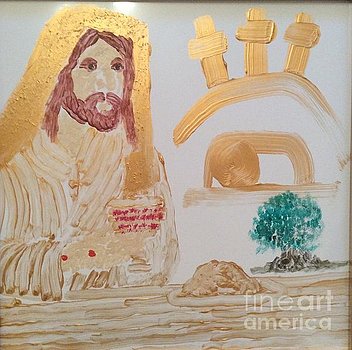
This is one of my recent paintings. It highlights Jesus the Christ, the Holy Messiah, at The Last Supper providing the Bread in remembrance of his body, the Wine in remembrance of his blood; the Garden of Gethsemane where in agony Jesus took upon himself the sins of the world, Golgotha where he continued the process voluntarily giving his life on the Cross,the Garden Tomb where his body lay for three days while he ministered in the Spirit world, the marks in his hands and wrists where the nails were placed, the Empty Tomb representing his Resurrection. I SHARE MY WITNESS THAT HE LIVES AND WILL SHORTLY RETURN.
Angels, authorities, and powers being made subject to him
Apostle and High Priest of our profession
Appears in the presence of God for us
Author and finisher of our faith
Author of eternal salvation
Bare our sins in his own body
Beginning
Beginning of the creation of God
Beloved Son
Beloved Son of God
Better than the angels
Blessed for evermore
Blessed of God
Branch
Bread of Life
Bread of life
Bright and morning star
By himself purged our sins
By whom are all things, and we by him
By whom God made the worlds
Captain of man’s salvation
Chosen One
Christ
Consecrated for evermore
Counselor
Crowned with glory and honor
Did no sin
Elect One
Emmanuel
Ever liveth to make intercession
Everlasting Father
Faithful and True
Foundation of the Church
God manifest in the flesh
God the Son
God’s anointed
God’s holy child Jesus
Good Shepherd
Governor who shall rule Israel
Harmless
Hath an unchangeable priesthood
Hath given us understanding that we may know him that is true
Hath obtained eternal redemption for us
He hath consecrated a new and living way
He hath perfected forever them that are sanctified
He sanctifieth the people by his blood
He that came by water and blood
He that cometh in the name of the Lord
He that hath the key of David
He that is holy
He that is holy, he that is true, he that hath the key of David
He that is true
He that liveth and was dead
He that liveth forever and ever
Heir of all things
His blood cleanseth from all sin
Holy
Holy One
Holy One of Israel
Holy, harmless, undefiled,
I am
I Am that I Am
In him is eternal life
In whom is salvation
Is ready to judge the quick and the dead
Jehovah
Jesus
Jesus Christ
Jesus of Galilee
Jesus of Nazareth
Jesus the Christ
Joseph’s son
Judge of quick and dead
King of Israel
King of kings
King of kings, and Lord of lords
King of Sion
King of the Jews
King of Zion
Lamb of God
Learned obedience by the things which he suffered
Left us an example
Light of the World
Living Water
Logos (the Word)
Lord
Lord both of dead and living
Lord of all
Lord of lords
Lord of the Sabbath
Made higher than the heavens
Made lower than the angels for the suffering of death
Made of a woman
Made of a woman, made under the law
Made under the law
Master
Mediator
Mediator of a better covenant
Mediator of the new testament
Meek and lowly
Messiah
Mighty God
Mighty One of Jacob
Nazarene
Not yea and nay, but in him was yea
Of the seed of David
Offered himself without spot
Omega
One body
One with the Father
Only begotten of the Father
Only Begotten Son
Our advocate with the Father
Our advocate with the Father
Our life
Our Paraclete (Advocate) with the Father
Our Passover
Our peace
Our Savior
Prince of Peace
Prophet
Propitiation for the sins of the whole world
Put away sin by the sacrifice of himself
Rabbi
Rabboni
Redeemer
Redemption
Redemption
Righteousness
Root and offspring of David
Sanctification
Savior of Israel
Savior of the World
Seed of the woman
Sent that we may live through him
Separate from sinners
Servant of the LORD
Shall appear the second time without sin unto salvation
Shepherd of Israel
Shiloh
Son of David
Son of GOD
Son of GOD THE FATHER
Son of Man
Son of the Highest
Son the Most High GOD
Stem of Jesse
Suffered for us
Suffered without the gate
Surety of a better testament
Tasted death for every man
Tempted in all points as we are
The brightness of God’s glory
The carpenter
The carpenter’s son
The chief cornerstone
The chosen of God
The Christ of God
The consolation of Israel
The deliverer
The door of the sheep
The end of the law for righteousness
The ending
The express image of God’s person
The faithful witness
The first and the last
The first begotten
The first begotten of the dead
The first fruits of them that slept
The forerunner
The good shepherd
The great God
The great shepherd of the sheep
The head of every man
The head of the Church
The High Priest for ever after the order of Melchisedec
The high priest of good things to come
The Holy One
The Holy One and the Just
The hope of glory
The image of God
The Just
The Just One
The King that cometh in the name of the Lord
The Lamb
The Lamb of God
The lamb without blemish and without spot
The life
The Light
The Light
The light of the world
The Lion of the tribe of Judah
The living bread
The living stone, disallowed of men, but chosen of God and precious
The Lord
The Lord from heaven
The Lord Jesus
The Lord of glory
The Lord our Righteousness
The LORD’S Christ
The mediator between God and men
The merciful and faithful high priest
The Messenger of the covenant
The Messiah
The Messias
The minister of the circumcision for the truth of God
The minister of the sanctuary of the true tabernacle
The offering and sacrifice to God for a sweet smelling savor
The only wise God our Savior
The power of GOD
The power of GOD and the wisdom of GOD
The Prince
The Prince of Life
The prince of the kings of the earth
The Prophet
The Prophet
The prophet of Nazareth
The propitiation for our sins
The propitiation through faith
The Resurrection
The resurrection and the life
The righteous judge
The righteous man
The root of David
The same forever
The same today
The same yesterday
The same yesterday, today, and forever
The Savior
The Savior of the body
The Savior of the world
The seed of Abraham
The shepherd and bishop of souls
The son of Abraham
The son of David
The son of Mary
The Son of the Blessed
The Son of the living God
The spiritual rock
The teacher come from God
The true vine
The truth
The vine
The way
The way, the truth, and the life
The wisdom of God
The Word
The word of God
The word of life
True and Faithful
Undefiled
Upholding all things by the word of his power
Which delivereth us from the wrath to come
Which is, and which was, and which is to come
Who came into the world to save sinners
Who died and rose again
Who gave himself for our sins
Who gave himself for us
Who is passed into the heavens
Who knew no sin
Who shall judge the quick and dead
Who sitteth on the right hand of God
Who was raised from the dead
Wisdom
Wisdom, righteousness, sanctification, and redemption unto us
Wonderful
Worthy of more glory than Abraham
Worthy of more glory than Moses
YHWH
ZION
[To translate this into your language. Click the red button below.]
Come join The “Restored” Church of Jesus Christ of Latter-day Saints today to be spiritually strong and able to cope with the increasing weather, financial, war, crime, and other social difficulties.
[READ/STUDY a FREE digital Bible and a FREE digital Book of Mormon and other holy scripture at www.churchofjesuschrist.org. Again, to translate this into your language. Click the red button below.]
Come to Jesus and join His true Church today.
I invite you to become a member of The Church of Jesus Christ of Latter-day Saints, the true Church of Jesus Christ, “RESTORED” vai the PROPHET JOSEPH SMITH and modern apostles and prophets, with true priesthood authority and true priesthood keys restored by heavenly messengers.
Call 1-801-240-1000 to talk to missionaries;
Contact missionaries at their Come Unto Christ website: https://www.churchofjesuschrist.org/comeuntochrist. Visit https://www.churchofjesuschrist.org.
They will teach you the true gospel of Jesus Christ in person, by zoom, by phone, by email, or text. They will teach you about Christ’s True Church and His Second Coming.
They will help you
– pray and repent of your sins,
– read the scriptures – the Holy Bible, the Holy Book of Mormon which is a second witness, a second Bible from peoples who lived in the western hemisphere, a second witness that Jesus is the Resurrected Living Christ, Yeshua, the Holy Messiah.
– attend Church, be baptized by immersion, be confirmed a member of the Church, and receive the Gift of the Holy Ghost, and fellowship with the Saints.
Watch on YouTube the semi-annual April and October conferences of The Church of Jesus Christ of Latter-day Saints during which living apostles and prophets and other Church leaders teach the pure gospel and bear testimony of Jesus the Living Christ and the restoration of His divine Church;
Search Google www.churchofjesuschrist.org; use the FREE LIBRARY to study in many languages the holy scriptures, the Bible, Book of Mormon, Doctrine & Covenants, Pearl of Great Price, and talks by living apostles and prophets.
Pray about what you have learned. Pray and ask Heavenly Father if these things are not true. Pray to receive the great gift of Charity, the Pure Love of Christ, without which we are nothing. Ask the missionaries to help you Join the Church today with your family and friends and neighbors.
If you are a leader of a group of spiritual people, a group of wonderful people searching for the true Church of Jesus Christ, testify to them. Bear witness that you have found the “Restored” Church of Jesus Christ of Latter-day Saints; that you want to become or are becoming a faithful member; thereby encourage them to join Christ’s true church, The Church of Jesus Christ of Latter-day Saints, thereby bring your many followers with you.
Best personal regards, Richard Linford, member
Published by
jesusi6_wp
I work at being a good husband, dad, grandpa, neighbor, member of The Church of Jesus Christ of Latter-day Saints, attorney at law, writer, and artist. My witness to the world is that Jesus is The Christ, Yeshua, The Resurrected Holy Messiah, who will soon come in power and great glory to judge the world and begin his thousand year Millennial Reign of peace. View all posts by jesusi6_wp